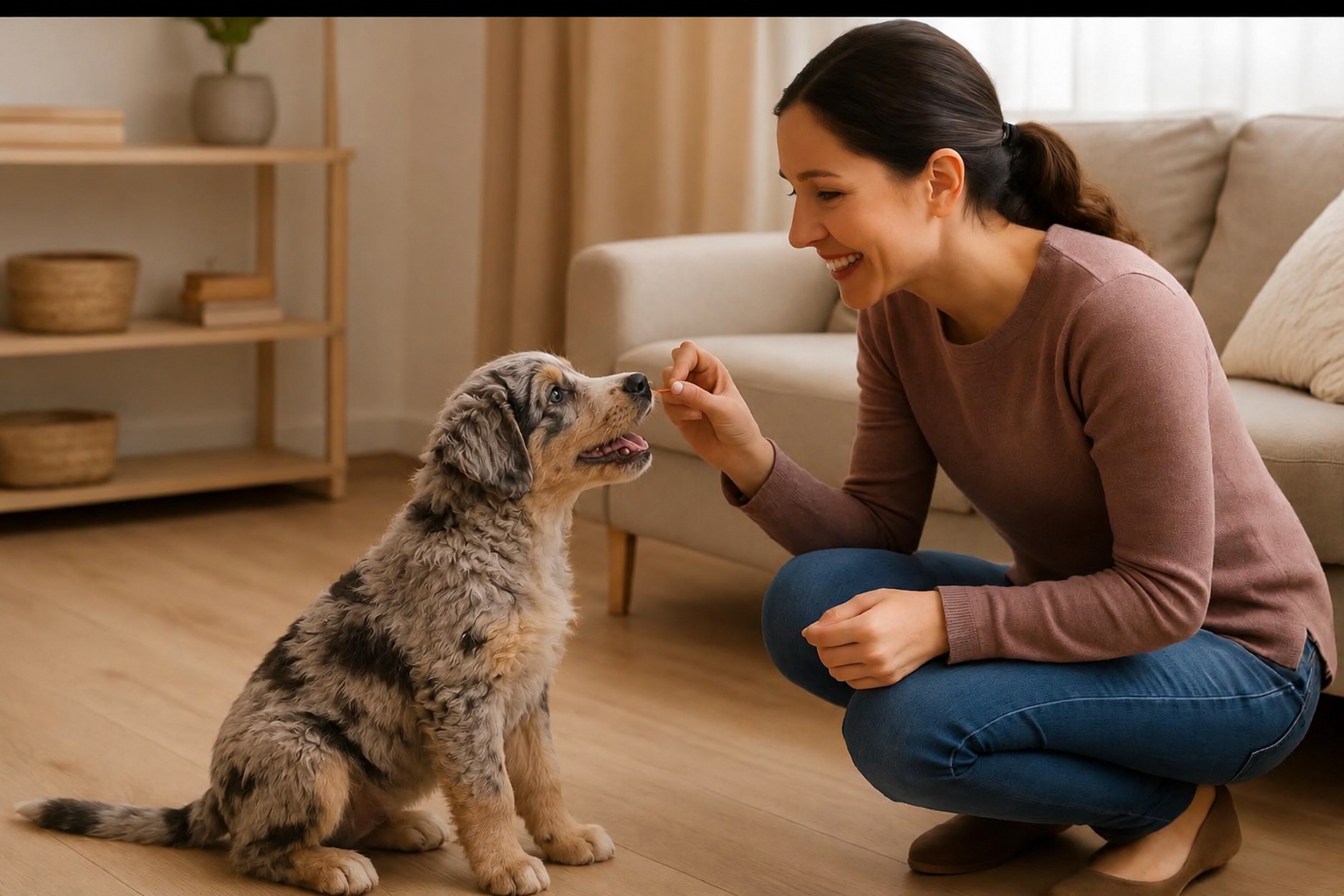
The First Few Days Matter Most
Your puppy now depends on you for everything – food, water, exercise, training, good health and hygiene.
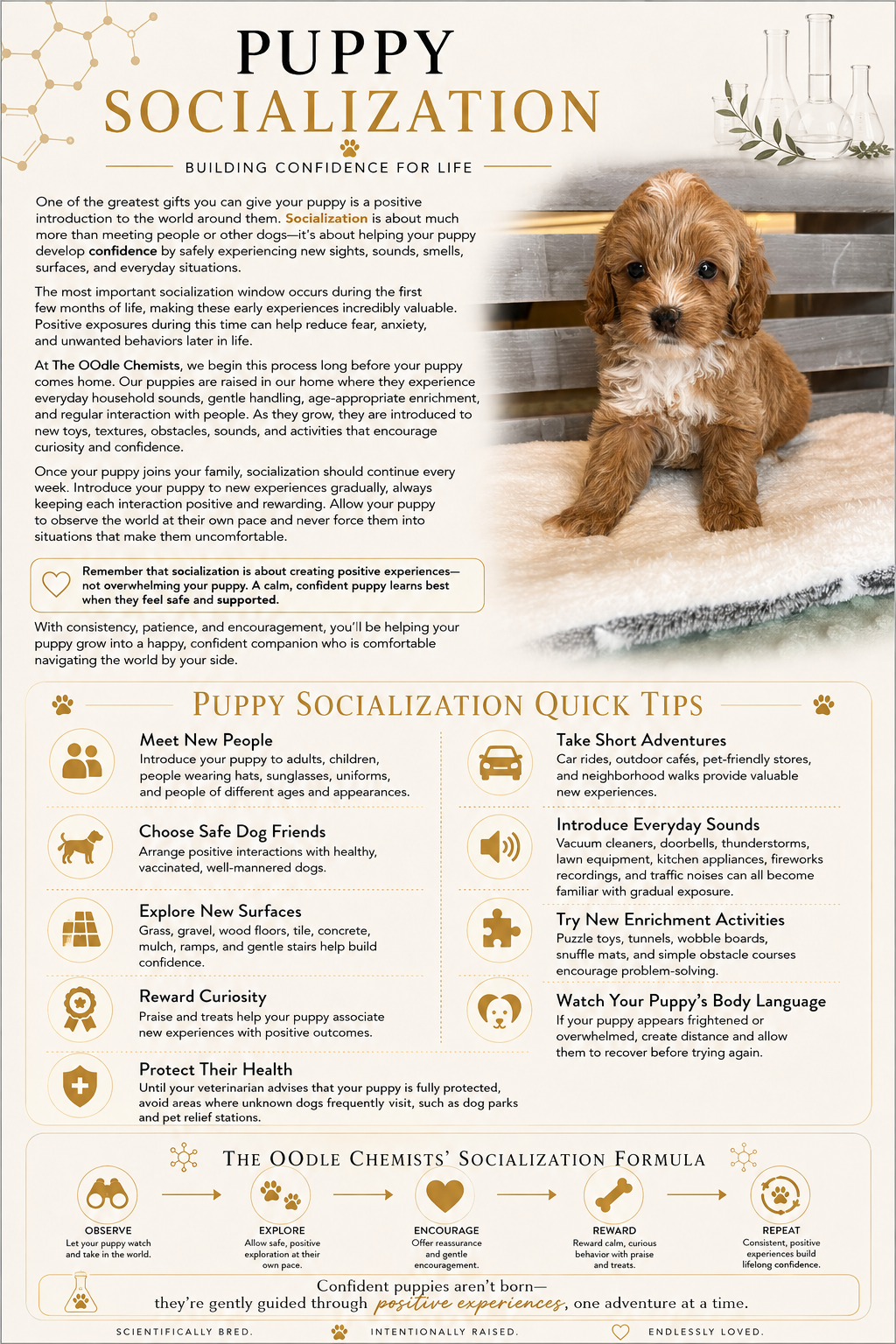
Bringing your puppy home is an exciting milestone—but for your puppy, it’s a major life change. New sights, new smells, new people, and a new routine can feel overwhelming.
Give your puppy the gift of a calm beginning. We recommend spending the first three days at home with no visitors or outings. This quiet adjustment period helps your puppy build confidence, settle into their new environment, and begin forming a strong bond with your family.
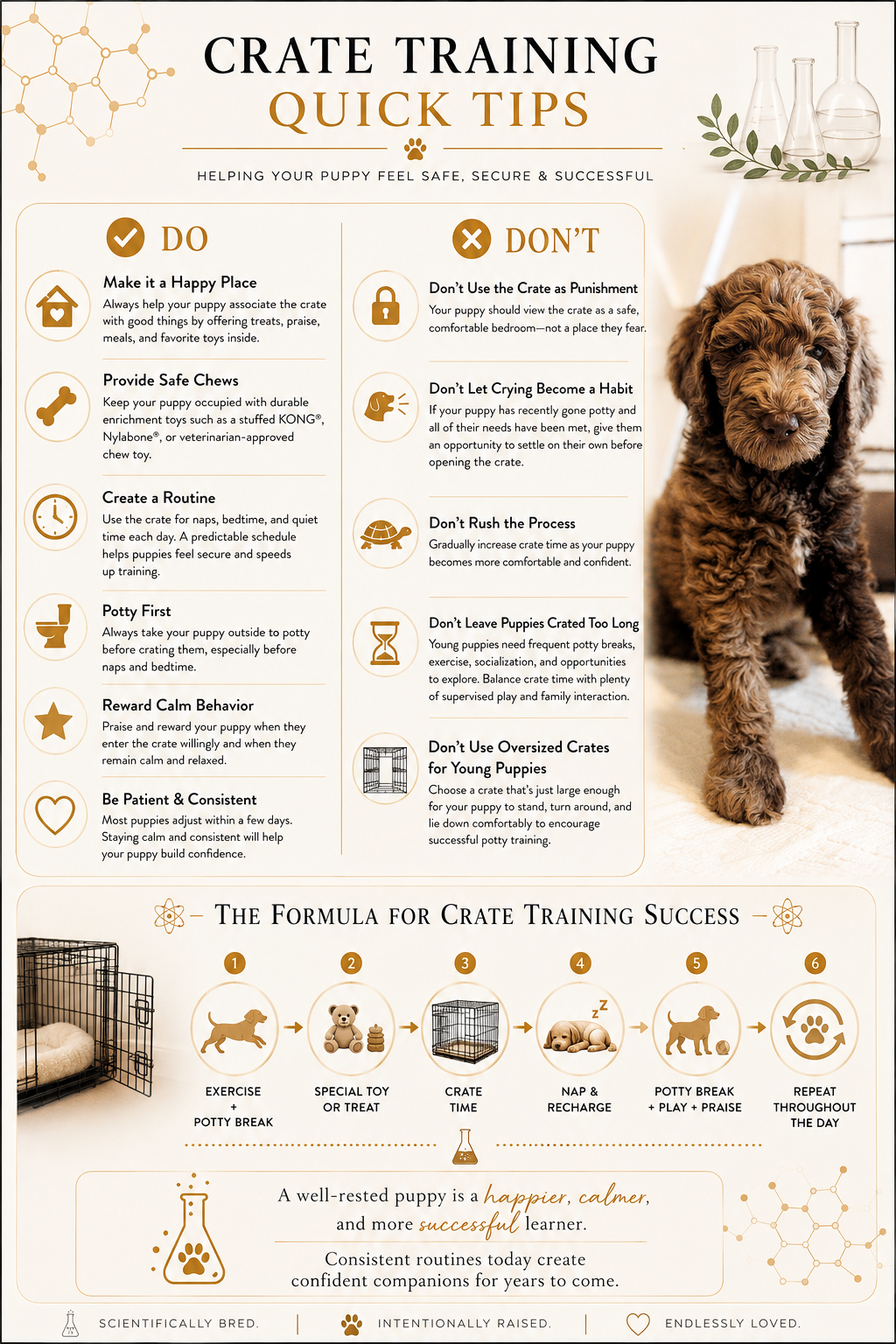
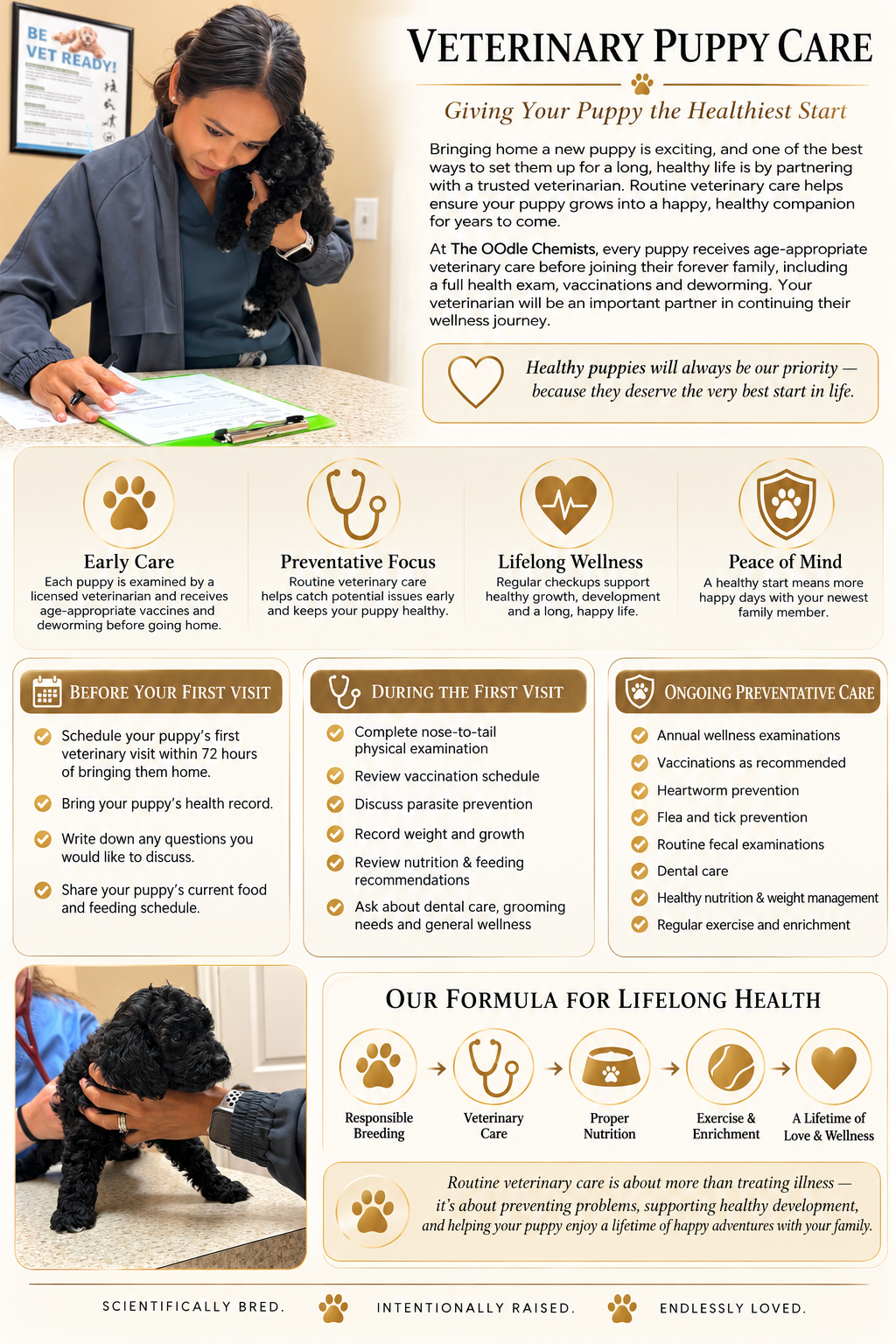
As you begin training, remember that puppies learn through patience, consistency, and positive reinforcement. Reward the behaviors you want with praise, affection, or a small treat, and keep commands simple. Every puppy learns at their own pace, so partner with your veterinarian and trainer to provide the care and guidance that’s right for your new companion.
Puppy Chewing
Managing Puppy Biting & Chewing
Those Tiny Teeth Are Sharp!
If your new puppy seems to want to chew on everything—including your hands and feet—you are not alone! Mouthing and chewing are completely normal puppy behaviors. Puppies explore the world with their mouths, and during teething, chewing also helps relieve discomfort as their adult teeth begin to develop. While this stage is temporary, it’s important to teach good habits from the very beginning. What may seem cute at eight weeks old can quickly become a frustrating habit if it’s allowed to continue.
The good news? With consistency and patience, your puppy will quickly learn what is—and isn’t—appropriate to chew.
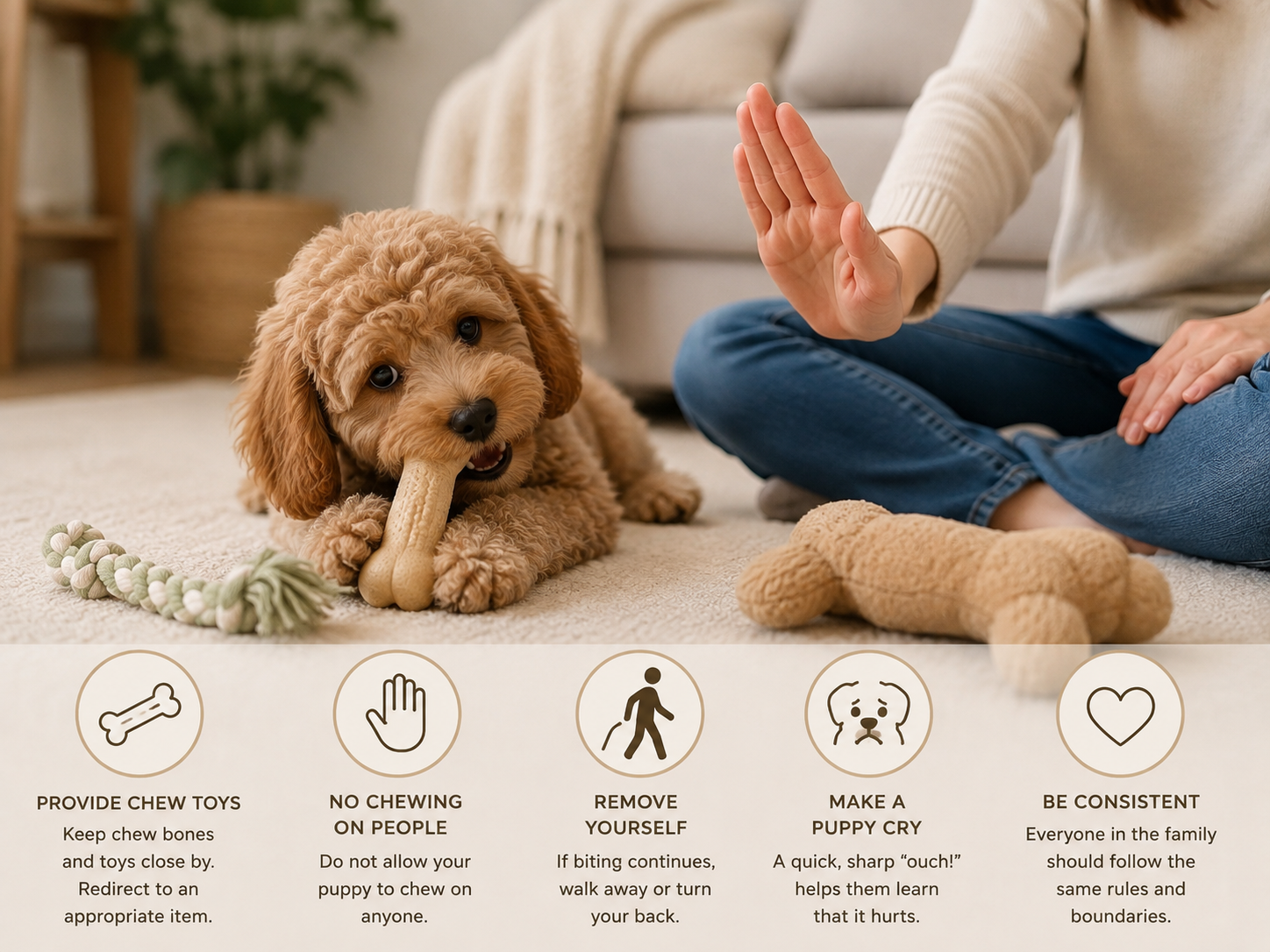
Always Provide Appropriate Chew Toys
Keep a variety of safe chew toys and puppy-safe chew bones within easy reach throughout your home. Whenever your puppy begins chewing on your hands, clothing, shoes, or furniture, calmly redirect them to an appropriate toy. Praise your puppy enthusiastically when they choose the correct item. We want them to learn that chew toys are fun and rewarding!
Never Allow Puppies to Chew on People
Even playful nibbling should not be encouraged. Puppies cannot distinguish between “sometimes” and “never.” If one family member allows playful biting while another discourages it, your puppy will become confused about the rules. This is especially important in homes with young children. A puppy that learns hands are toys may also think little fingers are toys. From day one, establish one simple family rule: People are never chew toys. Redirect First, Then Remove Your Attention
Avoid yelling, hitting, or physically correcting your puppy. Calm, consistent responses are much more effective and help build trust.
Speak Their Language
One technique that works surprisingly well is making a quick, high-pitched “Ouch!” or puppy-like yelp when your puppy bites too hard. This mimics the way littermates naturally communicate during play. When one puppy bites too hard, the other lets out a sharp cry and stops playing. Many puppies immediately recognize this signal and begin to soften their bite. If your puppy continues biting after the yelp, calmly end the interaction for a short period before trying again.
Consistency Creates Success
Learning bite inhibition takes time. Expect your puppy to make mistakes—they’re still babies! Every interaction is an opportunity to teach them the behaviors you want. When everyone in the family responds the same way, puppies learn remarkably fast.
Remember: Your puppy isn’t trying to be “bad”—they’re simply learning how to interact with the world. With patience, consistency, and positive guidance, this challenging stage will pass, leaving you with a gentle, well-mannered companion who knows exactly what belongs in their mouth… and what doesn’t.
Jumping
Teaching Four Paws on the Floor
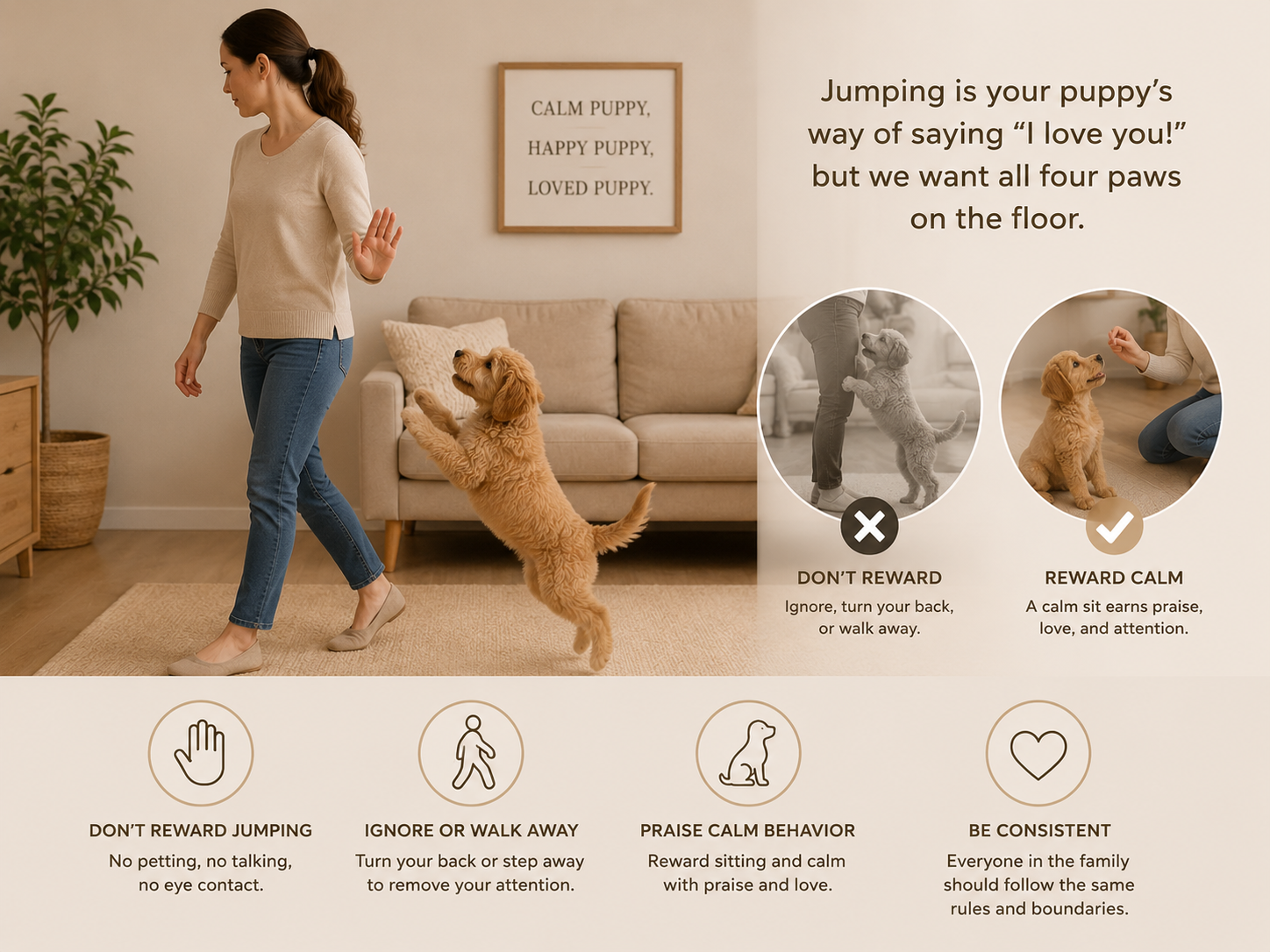
One of the most common puppy behaviors is jumping. While it may seem cute when your puppy is tiny, jumping can quickly become a habit that’s difficult to break as they grow. Puppies often jump because they’re excited, seeking attention, or simply saying, “I’m so happy to see you!”
The key is to teach your puppy that calm behavior earns attention.
When your puppy jumps, avoid petting, talking to, or making eye contact with them. Even saying “No” can be rewarding because your puppy is still receiving your attention. Instead, calmly turn your back, step away, or ignore the behavior until all four paws are back on the floor.
The moment your puppy sits or stands calmly, reward them with praise, gentle affection, or a small treat. This teaches them that being calm—not jumping—is the fastest way to receive love and attention.
Consistency is essential. Every member of the family should respond the same way each time. If one person allows jumping while another discourages it, your puppy will become confused and the behavior will take much longer to change.
Remember, you’re not punishing your puppy—you are simply teaching them a better way to greet people. With patience, consistency, and positive reinforcement, your puppy will learn that polite greetings are much more rewarding than jumping.
Today’s cute puppy becomes tomorrow’s well-mannered companion. Teaching good habits early is one of the greatest gifts you can give your dog.